Our work
CLIMAS: a future scenario workshop in the Vilnius Living Lab
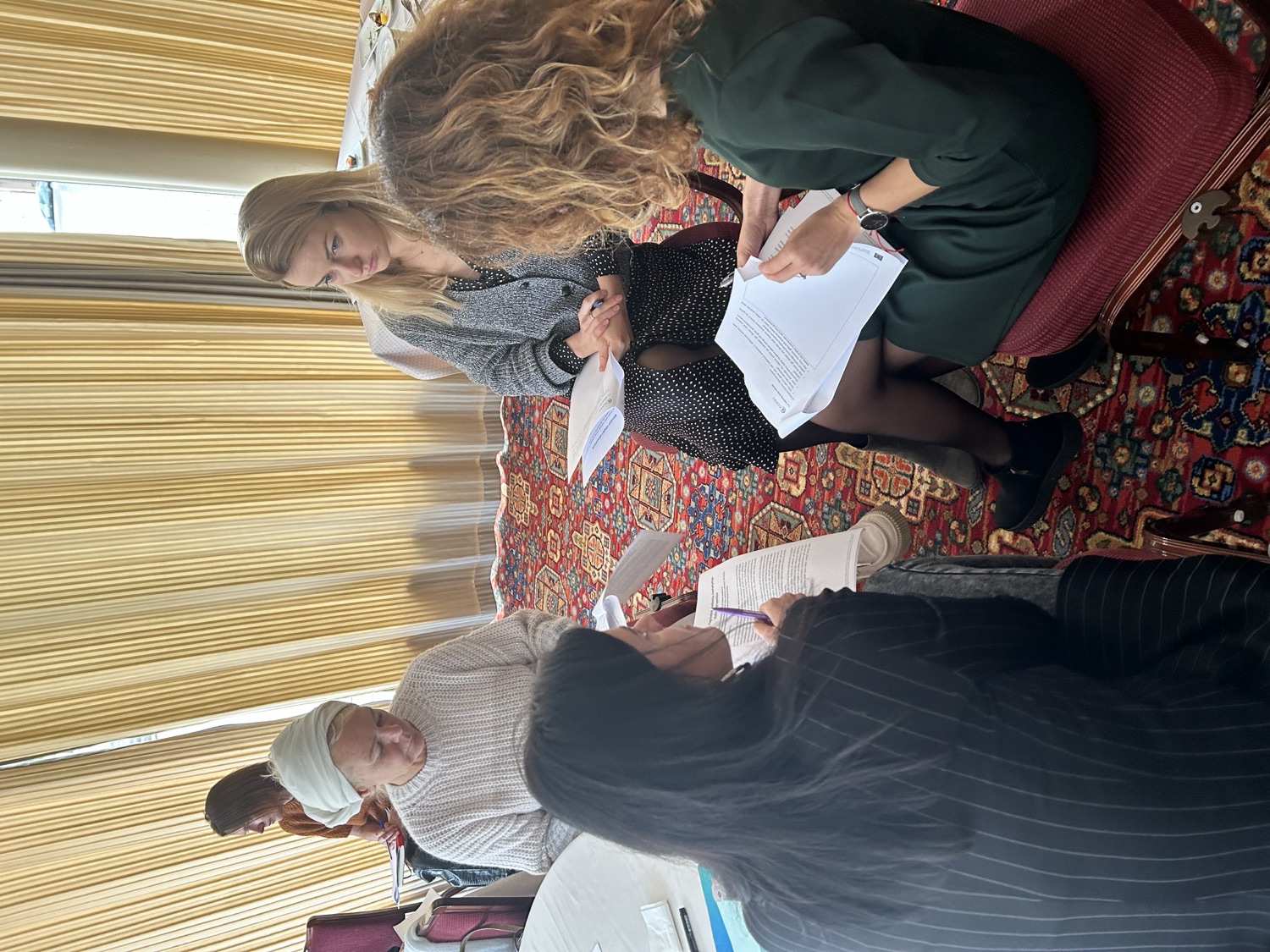
On 8 October 2023 a pilot workshop in the Vilnius Living Lab tested a method for building future scenarios together with citizens. Twelve participants produced four scenarios for a climate-resilient society and eight criteria for judging them. The workshop was run by VILNIUS TECH with Vilniaus planas as part of CLIMAS (Horizon Europe), using guidelines written by the project partner VUB.
Who was in the room. Twelve people, seven women and five men, invited one by one so that the group covered different positions: a university researcher, two municipal officers, a ministry official, a hospital representative, two NGO members, two business people, a member of a seniors' community, a PhD student and a student. Four facilitators worked with them. Each invitation said why that person's view was needed, and those who accepted received a short reading beforehand.
How the four hours were planned.
| Phase | What happened | Planned time |
|---|---|---|
| Welcome | Agenda, the project, the method, introductions | 15 min |
| Key drivers | What stands in the way of a climate-resilient society, and what drives change towards it | 60 min |
| Scenarios | Groups picked three drivers each, wrote two possible developments per driver and combined them in a morphological box | 60 min |
| Criteria | Groups proposed and weighted criteria for evaluating scenarios | 60 min |
| Close | Summary and next steps: a survey to prioritise the scenarios | 15 min |
The time horizon was 10 to 30 years.
What came out. Four scenarios:
- Innovation in communication. A ministry produces climate content that other institutions build into their own work. Citizens are involved through organised formats such as citizens' assemblies, and warnings about floods and storms reach people quickly and reliably.
- Local campaigns. Municipalities bring communities together around specific actions and show good examples widely. Meetings have to end in action, not only discussion.
- Climate friendly Lithuania. A national identity as a climate-neutral country, tied to decisions such as mandatory green areas in new developments, where residents decide what is greened and what is built. Ideas start from small community initiatives.
- Green Vilnius. The city monitors pollution, noise and climate risks digitally and has action plans for fires and drought. Incentives to replace old cars have to reach all social groups, not only those who can afford electric ones.
And eight criteria for a good scenario: relevant, adaptive, engaging, inclusive, sustainable, tangible, motivational and shared.
What did not go to plan.
- Time. The workshop ran an hour over its four hours. Each segment needed more time than it was given.
- Fatigue. Energy dropped towards the end. A longer format with proper breaks, including lunch, would work better than a compressed half day.
- The morphological box. Participants found it hard to follow. It needs a simpler explanation and a worked example before groups start.
- Scale. Participants framed their scenarios at national level, although the method asked for a wider European view. People think from the context they know, so prompts are needed to widen it.
What worked. Participants left saying they would bring climate considerations into their own work, and the pilot fed back into the guidelines before they were used in the project's other cities.
This case draws on work our team members did in their roles at VILNIUS TECH. Participio was not a partner in CLIMAS.