News
What 150 citizens told the EU about preparing for crises: final report of the Citizens' Panel on Preparedness
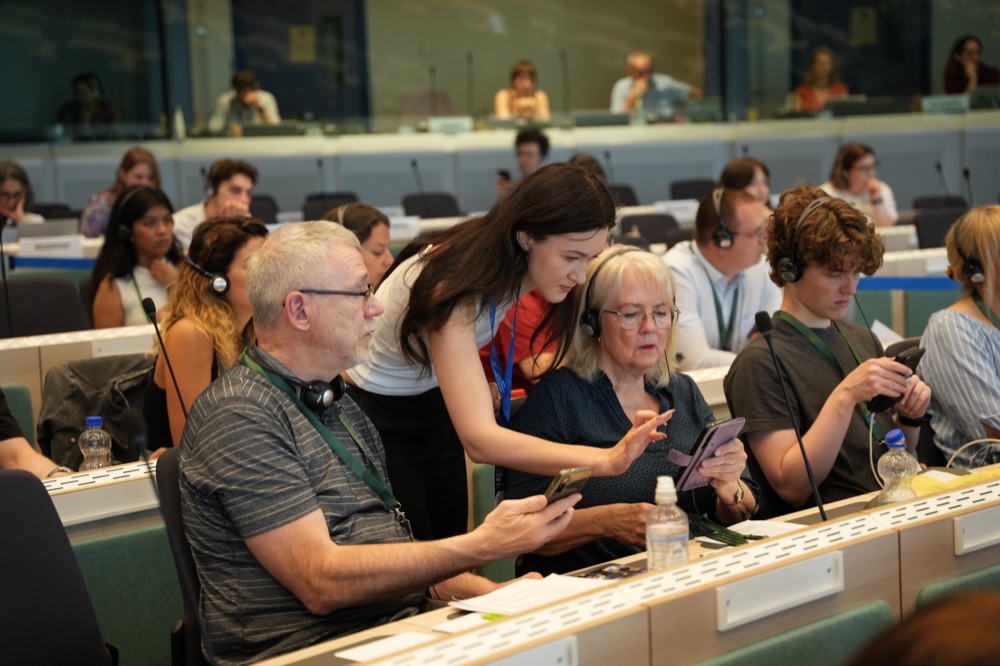
Image: © European Union, 2026
The European Commission published the final report of the European Citizens' Panel on Preparedness on 8 October 2026. The panel brought together 150 randomly selected citizens from all 27 Member States over three weekends in spring 2026. They adopted 20 recommendations on how the EU Preparedness Union Strategy should be put into practice.
The panel worked on two questions: how all European citizens can be empowered and better prepared for crises, and how the actions of the strategy can be inclusive, effective and respond to the needs of all citizens.
What the citizens recommended
The 20 recommendations fall under six topics: communication, information integrity, inclusion, self-sufficiency, engagement and education. On the last day the participants rated each one on a scale from 1 (low support) to 6 (high support). All 20 scored between 4.47 and 5.14 on average. The five with the highest support were:
- standardised and universal visual and auditory signals (5.14),
- lifelong preparedness education starting from preschool age (5.09),
- fair and sustainable funding for emergency preparedness education (5.05),
- prioritising food supplies from within the EU (5.04),
- accessible, differentiated multichannel warning systems (5.02).
The lowest average, 4.47, went to advancing critical thinking in education.
A recommendation about participation itself
Recommendation 5.3 asks for local citizens' panels on crisis preparedness (average support 4.87). The panel observed that many people want to contribute but do not know how, and that they do not see clear roles or clear results of getting involved. The citizens ask for panels that:
- are held regularly, each on a specific topic, to prepare for crises or to evaluate how one was managed,
- mirror the diversity of the local society, by random selection or by other methods,
- are organised together with local authorities and local associations,
- have an advisory mandate, with authorities following up in a transparent way and explaining the reason when a recommendation is not implemented,
- use language that relates to daily life and is not too academic.
The recommendation also says that citizen engagement should be a source of fun and a social activity.
How the panel was run
- Recruitment. 150 locations were randomly selected across the 27 Member States and recruiters went door to door at each of them. 935 qualified citizens registered their interest, and 150 were selected by lottery against quotas for gender, age, education, occupation, place of residence and attitude towards the EU. The target was at least two participants per Member State. Both participants from Lithuania attended all three sessions.
- Attendance. 147 people attended the first session in Brussels (20-22 March), 145 the online session (24-26 April) and 137 the closing session in Brussels (22-24 May).
- Working format. Participants worked in 12 groups of 12 to 13 people, each with a facilitator and an assistant and with no more than five languages per group. Plenaries were interpreted into 24 languages.
- Access to knowledge. A Knowledge Committee of experts prepared the information kit and spoke in the sessions. A Knowledge and Information Centre answered citizens' questions during the sessions, with each written answer verified by at least two of its members.
- Observers. No more than three external observers and two from the Commission were allowed per working group.
What participants said afterwards
- 82 of 121 respondents had never taken part in a citizen participation process before.
- 106 of 120 agreed that their voice mattered in their working group, and 107 of 119 felt respected in the discussions.
- Asked whether the final recommendations included the perspectives of all panel members, 84 of 123 answered 4 or 5 on a five-point scale.
- Before the panel, 40 of 78 respondents answered 4 or 5 when asked whether the recommendations would have an impact.
Why it is worth reading
For anyone planning a participatory process, the methodological chapter is a compact, documented example of recruitment by lottery, multilingual facilitation and expert input that is kept separate from the deliberation. The report does not yet say how the Commission will respond to the recommendations.
Preparedness is also a funding topic. The Horizon Europe call on new ways of building risk awareness and disaster preparedness closes on 5 November 2026, see our funding calls for October 2026.
Read more. Final report (PDF, 44 pages) · Final recommendations (PDF) · Panel page with agendas, session summaries and recordings.
The report is published by the European Union under the CC BY 4.0 licence. It notes that it should not be considered as representative of the European Commission's official position.