How-to guides
Expected outcomes vs impacts: how to map them
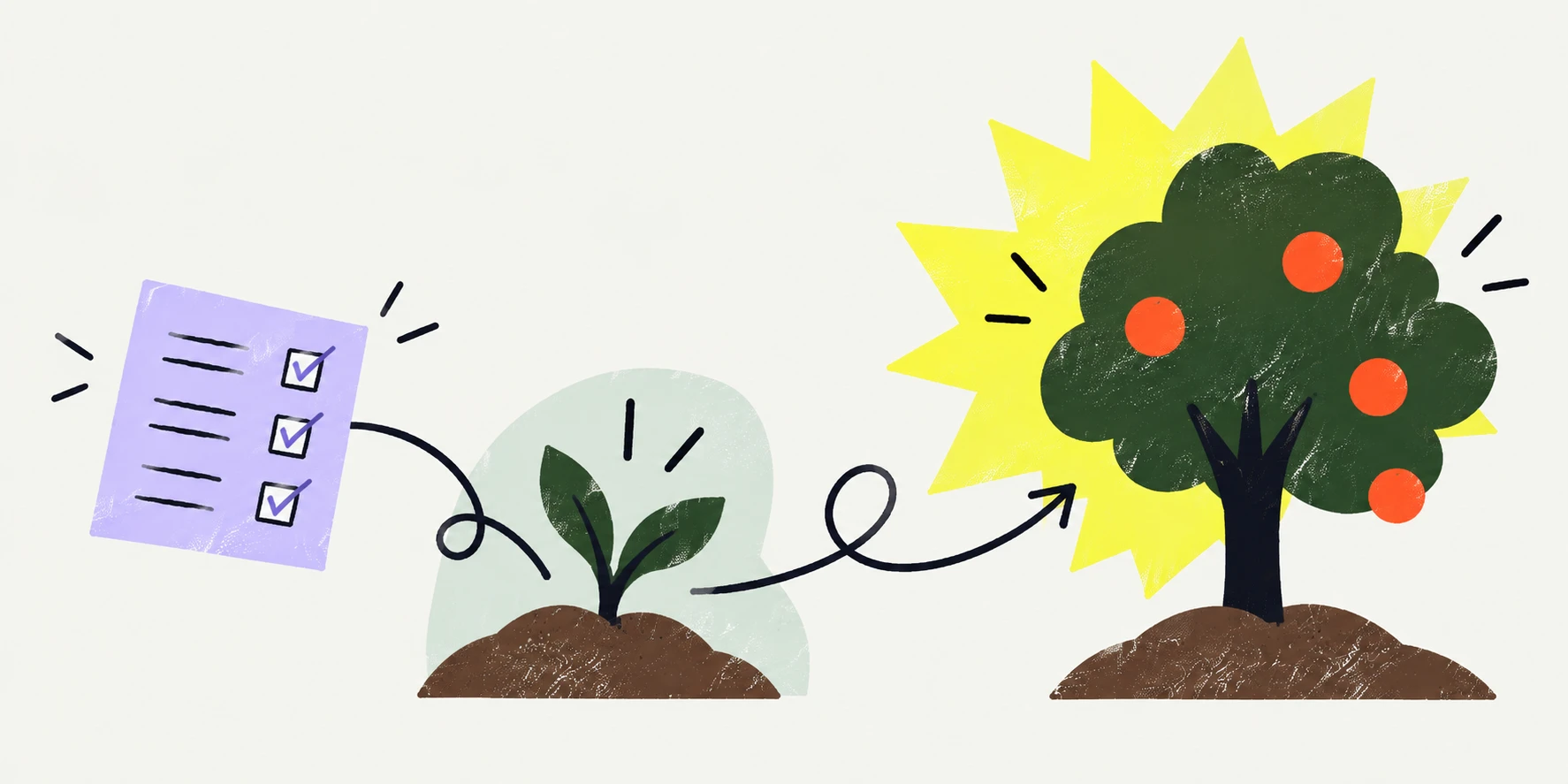
In Horizon Europe, expected outcomes belong to the topic and expected impacts belong to the destination. Outcomes are medium-term changes among the people who use your results. Impacts are wider, longer-term effects that several projects contribute to. The proposal template asks you to connect your results to both, in that order, and the Impact criterion scores how credible that connection is. References are to the application form for Research and Innovation Actions (RIA) and Innovation Actions (IA), V5.1 of 22 January 2026, and the Work Programme 2026-2027.
Three levels, defined by the Commission
The glossary in Part B of the application form separates three terms and illustrates them with one airport example.
| Term | Definition in the template | When | Where the expectation is written |
|---|---|---|---|
| Results | What the project generates: know-how, prototypes, datasets, policy recommendations. Example: a trial of a forecasting system with 3 airports. | During the project | Your proposal |
| Outcomes | Uptake, diffusion, deployment or use of results by direct target groups. Example: 9 European airports adopt the system. | During or shortly after the project | The "Expected Outcome" part of the topic |
| Impacts | Wider effects on society, the economy and science, enabled by the outcomes. Example: higher passenger capacity, lower infrastructure costs. | Some time after the project | The "Expected impact" part of the destination |
The General Introduction to the Work Programme 2026-2027 uses the same split. A destination describes the expected impact, which in many cases is one of the 32 expected impacts of the Strategic Plan 2025-2027. A topic describes the expected outcomes and the scope.
What the template asks in section 1.1
Section 1.1, "Objectives and ambition", asks you to describe the objectives and explain why they are pertinent to the work programme topic, and whether they are measurable, verifiable and realistically achievable. The Excellence section opens with a reminder that its aspects are taken into account only to the extent that the proposed work is within the scope of the topic. The first link is made here: objectives have to sit inside the topic.
What the template asks in section 2.1
Section 2.1, "Project's pathways towards impact", asks for a narrative with two components.
- (a) Contribution. The unique contribution of your results to (1) the outcomes specified in the topic and (2) the wider impacts specified in the destination. Quantified estimates are requested where possible and meaningful. The template asks for effects of your project, not of the field in general, and for target groups broken into specific segments.
- (b) Requirements and barriers. Factors beyond the scope and duration of the project that may decide whether outcomes and impacts happen, for example other research, regulation, markets or user behaviour, with mitigating measures. Project management risks go to section 3.
The template defines a "pathway to impact" as the logical steps that start from the project's results, pass through dissemination, exploitation and communication, contribute to the topic's expected outcomes, and end in the destination's wider impacts. Section 2.3 offers an optional summary canvas with six boxes: specific needs, expected results, dissemination, exploitation and communication measures, target groups, outcomes, impacts.
How it is scored
Under General Annex D of the Work Programme 2026-2027, the first aspect of the Impact criterion is the credibility of the pathways to achieve the expected outcomes and impacts specified in the work programme. The standard briefing for experts (version 14.0, 15 April 2026) tells evaluators to ask whether the contribution to outcomes and to wider impacts is credible, and whether barriers are identified and mitigated. It also notes that from the Work Programme 2026-2027 onwards the scale and significance of contributions are no longer considered.
A way to map them
The canvas in section 2.3 can serve as a working table before writing.
- Copy each expected outcome of the topic into its own row. Check the sentence that introduces them: some topics ask projects to contribute to all listed outcomes.
- For each row, name the result or results of your project that feed it.
- Name the specific target group that has to take up each result.
- Name the dissemination, exploitation or communication measure that reaches that group.
- Add the expected impact from the destination text and state which outcomes lead to it.
- List the barriers outside the project for each row, and a mitigating measure.
A row with no result, no target group or no measure shows a gap in the pathway.
Sources
- Horizon Europe standard application form (RIA, IA), V5.1, 22 January 2026
- Work Programme 2026-2027, part 1, General Introduction
- Work Programme 2026-2027, part 15, General Annexes
- Horizon Europe proposal evaluation, standard briefing for experts, version 14.0, 15 April 2026
- European Commission, Horizon Europe strategic plan 2025-2027